
If you're new to western style and not sure where to start, this guide covers everything — what makes a western shirt different, how to wear one, and how to find one that actually fits.
What Makes a Western Shirt Different
At a glance, a western shirt looks like a button-up. But a few design details set it apart:
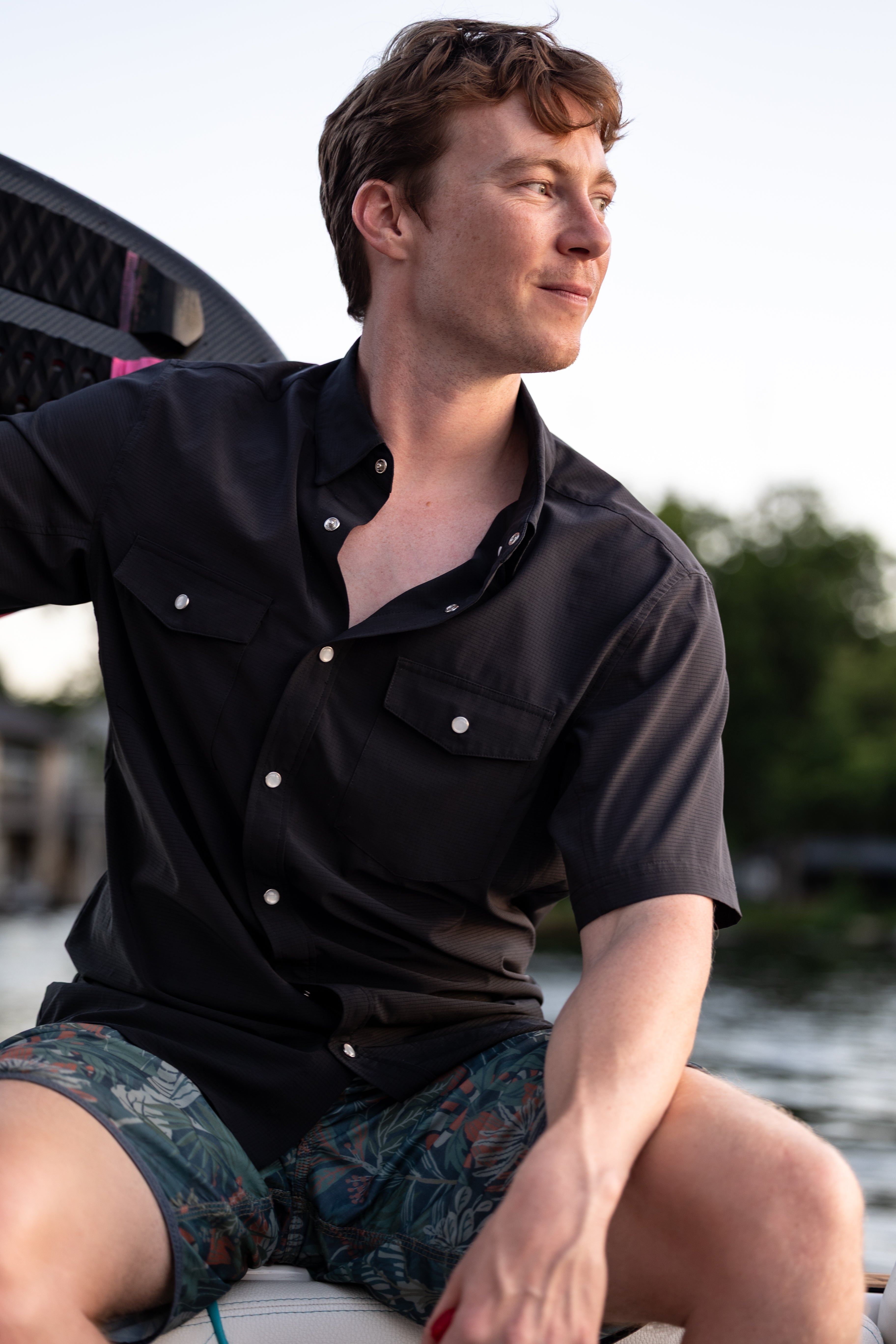
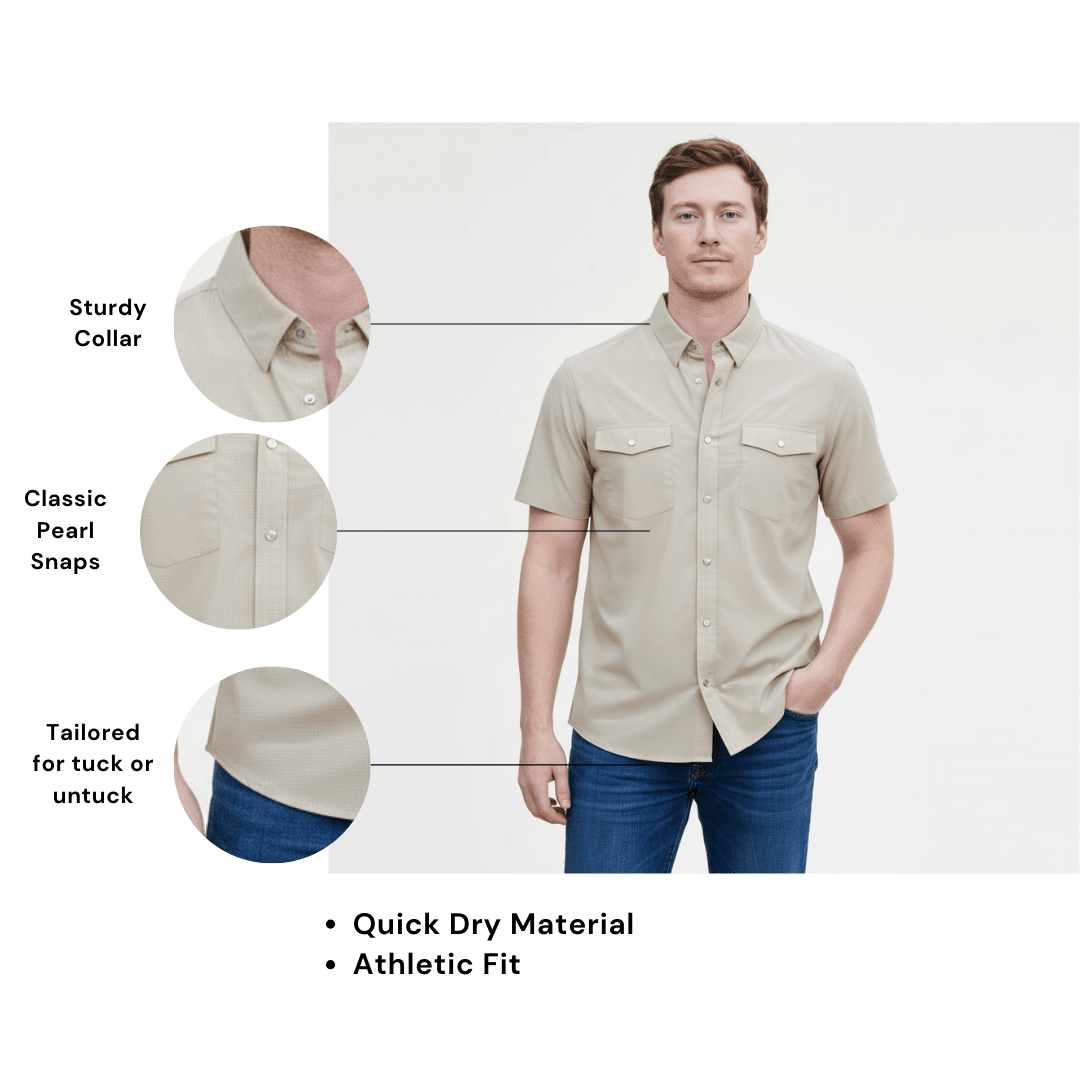
Pearl Snaps Instead of Buttons Most authentic western shirts use snap fasteners rather than buttons. The snaps are faster to open, don't unbutton accidentally, and can be popped open quickly — a practical feature that originated with working cowboys who needed to remove a shirt fast in an emergency. Today it's a style detail as much as a functional one.
The Collar Traditional western shirts have a distinctive pointed collar, sometimes called a "sawtooth" or "spread" collar. Modern versions have simplified this somewhat, but the western collar still tends to be more pronounced than a standard dress shirt collar.
Pockets Classic western shirts have two front chest pockets with snap or button flap closures. On a working shirt, these held pencils, cigarettes, and small tools. Today they're mostly decorative but still part of the authentic western look.
Western Shirt Fabrics — From Traditional to Modern
Cotton: The original western shirt fabric. Soft, breathable in mild weather, easy to care for. Downside: absorbs sweat, gets heavy when wet, takes forever to dry.
Cotton-Poly blend: A middle ground. Softer than pure polyester, more durable and slightly faster-drying than pure cotton.
Performance polyester/spandex: The modern evolution. Moisture-wicking, stretch, fast-drying. Best for hot climates and active wear. Looks and drapes more like cotton than it used to.
Chambray: A lightweight cotton weave that's more casual and breathable than standard cotton. Common in more fashion-forward western styles.
How to Find One That Fits
The single most common mistake beginners make with western shirts is buying a size that's too large. Traditional western shirts were cut boxy for workwear, and a lot of budget western shirts still follow that pattern. The result looks like a hand-me-down rather than personal style.
What to look for:
- Shoulder seam should sit at the edge of your shoulder, not halfway down your arm
- Chest should be fitted without pulling when you button/snap it closed
- Body length should hit at or just below your waistband — not mid-thigh
- Sleeves should end at your wrist bone
If you're buying an athletic-fit western shirt and you're between sizes, size up. If you're buying a regular fit, consider sizing down if you're at the lower end of the size range.
Starting Your Western Wardrobe
One shirt is all you need to start. Pick a solid color in a neutral — sage green, tan, gray — that pairs with jeans and boots without needing to think about it. Wear it a few times. See how it fits into your actual life before buying five more.
The Driftwood Performance Pearl Snap is a good first western shirt precisely because it's not precious — it's made to be worn hard, washed easily, and reached for without thinking. Start with one and go from there.
Share:
Western Shirts in Texas: What to Wear and Where to Wear It
The Best Gifts for Country Music Fans and Western Style Guys